Lower car insurance is not just a dream – it’s a tangible goal that can be achieved through understanding various factors and strategies. From leveraging technology to exploring discounts, there are numerous ways to reduce your insurance premiums while still maintaining essential coverage. Let’s dive into the world of lower car insurance and discover how you can save money without compromising on protection.
Factors affecting car insurance rates
Car insurance rates can be influenced by various factors that insurers take into consideration when determining premiums. Understanding these factors can help individuals make informed decisions to potentially lower their insurance costs.
Age
Age plays a significant role in determining car insurance rates. Younger drivers, especially teenagers, are considered high-risk due to their lack of experience on the road. On the other hand, older drivers may also face higher premiums, as they may have slower reaction times. Insurers typically offer lower rates to drivers in their mid-20s to mid-30s, as they are seen as more responsible behind the wheel.
Location
Where you live can impact your car insurance rates. Urban areas with higher population densities and increased traffic congestion may have higher premiums compared to rural areas. Additionally, areas prone to theft or vandalism may also result in higher insurance costs.
Driving History
Your driving record is a crucial factor in determining insurance rates. Drivers with a history of accidents or traffic violations are considered higher risk and may face increased premiums. On the other hand, individuals with a clean driving record are more likely to receive lower rates.
Type of Vehicle, Lower car insurance
The make and model of your vehicle can also affect insurance rates. High-performance cars or luxury vehicles may result in higher premiums due to their repair costs and likelihood of theft. On the other hand, family-friendly vehicles with good safety ratings may qualify for lower insurance rates.
Credit Score
Insurance companies may also consider your credit score when calculating premiums. A higher credit score is often associated with lower insurance rates, as it is seen as an indicator of financial responsibility.
Annual Mileage
The number of miles you drive annually can impact your insurance costs. Drivers who commute long distances or frequently use their vehicles may face higher premiums compared to those who drive less frequently.
Coverage Levels
The type and amount of coverage you choose can also affect insurance rates. Opting for higher coverage limits or additional features may result in higher premiums. However, it is essential to strike a balance between adequate coverage and affordability.
Bundling Policies
Bundling your auto insurance with other policies, such as homeowners or renters insurance, can often lead to discounts on premiums. Insurers may offer reduced rates for customers who purchase multiple policies from the same company.
Defensive Driving Courses
Completing a defensive driving course can demonstrate your commitment to safe driving practices, leading to lower insurance rates. Some insurers offer discounts to drivers who have successfully completed an approved defensive driving program.
Comparison of insurance providers
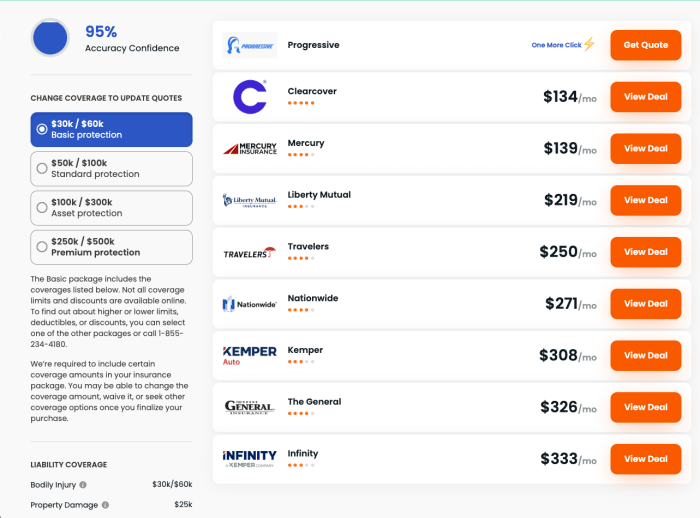
When choosing an insurance provider for your car, it is essential to compare various companies based on their coverage options, customer service, and pricing. Each insurer has its own way of calculating rates and offering discounts, so it’s crucial to explore your options to find the best deal.
Coverage Options
- Comprehensive coverage: This type of policy typically covers damage to your car from incidents other than collisions, such as theft, vandalism, or natural disasters.
- Liability coverage: This protects you if you’re at fault in an accident and covers the other party’s medical expenses or property damage.
- Collision coverage: This pays for repairs to your car if you’re involved in a collision with another vehicle or object.
Customer Service
- Look for insurers with a reputation for excellent customer service, including easy claims processes and responsive support.
- Check online reviews and ratings to get an idea of how satisfied customers are with their insurer.
Pricing and Discounts
- Insurance rates can vary widely between companies, so it’s important to get quotes from multiple insurers to compare prices.
- Insurers offer discounts for various reasons, such as having a clean driving record, bundling policies, or completing a defensive driving course.
Tips for Finding the Best Deal
- Shop around and compare quotes from at least three different insurers to ensure you’re getting the best price for the coverage you need.
- Ask about available discounts and ways to lower your premium, such as raising your deductible or reducing coverage on older vehicles.
Understanding insurance deductibles
When it comes to car insurance, understanding deductibles is crucial in determining the cost of your premiums. An insurance deductible is the amount of money you agree to pay out of pocket before your insurance coverage kicks in to cover the rest of the expenses in the event of a claim.Choosing a higher deductible can lead to lower premiums because you are agreeing to take on more financial responsibility in the event of an accident or damage to your vehicle.
Insurance companies see this as a lower risk for them, so they are willing to offer you a lower premium in return.
Pros and cons of adjusting deductibles
- Pros:
- Lower premiums: Choosing a higher deductible can significantly reduce your monthly insurance payments.
- Encourages safe driving: Knowing you have a higher out-of-pocket expense may make you more cautious on the road.
- Cons:
- Financial risk: If you choose a high deductible and cannot afford to pay it in the event of a claim, you may find yourself in a tough financial situation.
- Higher immediate costs: While you save on premiums, you need to have the funds available to cover the deductible if an accident occurs.
Examples of deductible amounts affecting insurance costs
| Deductible Amount | Annual Premium |
|---|---|
|
$1200 |
|
$1000 |
|
$800 |
In the above table, you can see how adjusting your deductible amount can directly impact your annual premium. By choosing a higher deductible, you can potentially save hundreds of dollars each year on your car insurance.
Types of coverage that can lower car insurance
When it comes to lowering car insurance premiums, opting for specific types of coverage can make a significant difference. Understanding the different types of coverage available and how they can affect your insurance costs is crucial in making informed decisions.
Liability Coverage
Liability coverage is mandatory in most states and covers the costs of injuries and damages to other parties in an accident where you are at fault. By having sufficient liability coverage, you can protect your assets and potentially lower your insurance premiums.
Collision Coverage
Collision coverage helps pay for repairs to your vehicle in the event of a collision with another vehicle or object. While collision coverage can increase your premium, opting for a higher deductible can help lower your overall insurance costs.
Comprehensive Coverage
Comprehensive coverage protects your vehicle from damages not caused by a collision, such as theft, vandalism, or natural disasters. By adding comprehensive coverage to your policy, you can minimize out-of-pocket expenses for non-collision related damages.
Uninsured Motorist Coverage
Uninsured motorist coverage provides protection in case you are involved in an accident with a driver who does not have insurance. This coverage can help cover medical expenses and vehicle repairs, potentially reducing your overall insurance costs.
Utilizing technology for lower insurance rates
In today’s digital age, technology plays a significant role in not only simplifying our lives but also in helping us save money, including on car insurance. By leveraging various technological tools and devices, drivers can potentially lower their insurance rates and premiums.
Telematics devices and usage-based insurance
Telematics devices, such as plug-in devices or smartphone apps, allow insurance companies to track your driving behavior in real-time. This data includes information on your speed, braking patterns, mileage, and more. By opting for usage-based insurance, where your premium is directly linked to how safely you drive, you can demonstrate responsible driving habits and qualify for discounted rates based on actual data rather than general assumptions.
Role of mobile apps and online tools
Mobile apps provided by insurance companies offer policyholders the convenience of managing their insurance policies on-the-go. These apps often include features like digital ID cards, claims filing, bill payment, and policy updates. By staying on top of your policy details and utilizing online tools for tasks like comparing quotes or adjusting coverage, you can ensure you have the most cost-effective insurance plan tailored to your needs.
Examples of technology-driven solutions
Pay-Per-Mile Insurance
Some insurers offer pay-per-mile programs that charge you based on the number of miles you drive. If you have a low annual mileage, this could result in significant savings.
Anti-Theft Devices
Installing anti-theft devices like car alarms or GPS trackers can not only protect your vehicle but also lead to discounts on your insurance premiums.
Driver Monitoring Apps
Certain apps provide feedback on your driving behavior and offer tips for improvement. By becoming a safer driver, you may qualify for lower rates over time.
Tips for maintaining a good driving record
Maintaining a good driving record is crucial not only for your safety on the road but also for keeping your car insurance rates low. By following safe driving habits, avoiding traffic violations, and staying accident-free, you can positively impact your insurance premiums.
Strategies for safe driving habits
- Always obey traffic laws and road signs.
- Avoid distractions while driving, such as texting or eating.
- Maintain a safe following distance from other vehicles.
- Use turn signals when changing lanes or making turns.
- Regularly check your mirrors and blind spots for other vehicles.
Importance of avoiding traffic violations
Avoiding traffic violations such as speeding tickets, reckless driving, or DUIs is essential for maintaining a clean driving record and low insurance rates. Insurance companies view these violations as risky behavior, which can lead to higher premiums.
Impact of continuous safe driving practices on insurance premiums
- Insurance companies often offer discounts for policyholders with a history of safe driving.
- Accumulating years of safe driving experience can lead to lower insurance rates over time.
- Regularly reviewing and updating your driving skills through defensive driving courses can further reduce insurance costs.
Exploring discounts and rewards programs: Lower Car Insurance
When it comes to lowering car insurance rates, taking advantage of discounts and rewards programs can be a game-changer. Insurance companies offer various discounts and incentives that can significantly reduce your premiums, making it essential to explore these opportunities.
Multi-Policy Discount
- Insurance companies often provide a discount to policyholders who bundle multiple insurance policies, such as auto and home insurance, with the same provider.
- This discount can lead to substantial savings on your overall insurance costs while simplifying the management of your policies.
Good Student Discount
- Students who maintain good grades in school may qualify for a good student discount from their insurance provider.
- This discount rewards academic excellence and responsible behavior, reflecting positively on the student’s risk profile in the eyes of insurers.
Low Mileage Discount
- If you drive fewer miles than the average driver, you may be eligible for a low mileage discount.
- This discount recognizes that lower mileage typically correlates with a reduced risk of accidents, resulting in lower premiums for policyholders.
Loyalty Programs and Incentives
- Insurance companies often offer loyalty programs that reward long-term customers with discounts, benefits, or enhanced coverage options.
- By staying loyal to your insurer and maintaining a good relationship, you can unlock additional savings and perks over time.
Tips for Maximizing Discounts
- Regularly review your policy and inquire about available discounts to ensure you are taking advantage of all potential savings opportunities.
- Consider adjusting your coverage or policy details to qualify for specific discounts that may apply to your situation.
- Compare quotes from different insurance providers to find the best combination of coverage, discounts, and premiums for your needs.
Impact of location on insurance premiums
Geographic location plays a significant role in determining car insurance rates. Factors such as crime rates, population density, and the frequency of accidents in a particular area can all influence how much you pay for coverage. It’s important to understand how your location can impact your insurance premiums and what steps you can take to mitigate any potential increases.
Urban vs. Rural Areas
In general, urban areas tend to have higher insurance premiums compared to rural areas. This is because cities typically have higher rates of accidents, theft, and vandalism, leading to increased risk for insurance providers. On the other hand, rural areas are often considered safer and less prone to these risks, resulting in lower insurance costs for drivers.
- Urban Areas:
Urban areas are characterized by higher population density, increased traffic congestion, and a greater likelihood of accidents and theft. As a result, insurance premiums are typically higher in cities compared to rural areas.
- Rural Areas:
Rural areas are known for their lower population density, less traffic congestion, and decreased risk of accidents and theft. Drivers in rural areas often enjoy lower insurance rates due to the reduced likelihood of filing claims.
Importance of regular policy reviews
Regularly reviewing your car insurance policy is essential to ensure that you have adequate coverage and are not paying more than necessary. Life changes and fluctuations in the insurance market can impact your rates, making it crucial to stay informed and make adjustments when needed.
Impact of Life Changes on Insurance Rates
Life events such as getting married, buying a new car, moving to a different location, or adding a teen driver to your policy can all affect your car insurance rates. Getting married, for example, may result in lower rates as insurance companies often view married individuals as more responsible and less risky to insure. On the other hand, buying a new car with higher value or adding a teen driver, who is considered high-risk, could increase your premiums.
Checklist for Policy Review
- Review your coverage limits and deductibles to ensure they still meet your needs.
- Check for any discounts you may be eligible for, such as safe driver discounts or bundling policies.
- Update your policy with any changes in your life, such as a change in address or new vehicles.
- Consider shopping around and comparing quotes from different insurance providers to ensure you are getting the best rate.
- Consult with your insurance agent or provider to discuss any questions or concerns you may have about your policy.
Final Review
As we wrap up our discussion on lower car insurance, remember that being informed and proactive is key to securing the best deal. By applying the insights and tips shared here, you can navigate the complex world of insurance with confidence and optimize your savings without sacrificing quality. Lower car insurance is within reach – all it takes is a bit of knowledge and strategic planning.